Greek kērykeion. Latin caduceus. A herald’s wand. Two snakes. Wings for speed. Apollo gave it in the bargain for the lyre. A messenger may pass. A truce may be spoken.
Light · before NASA
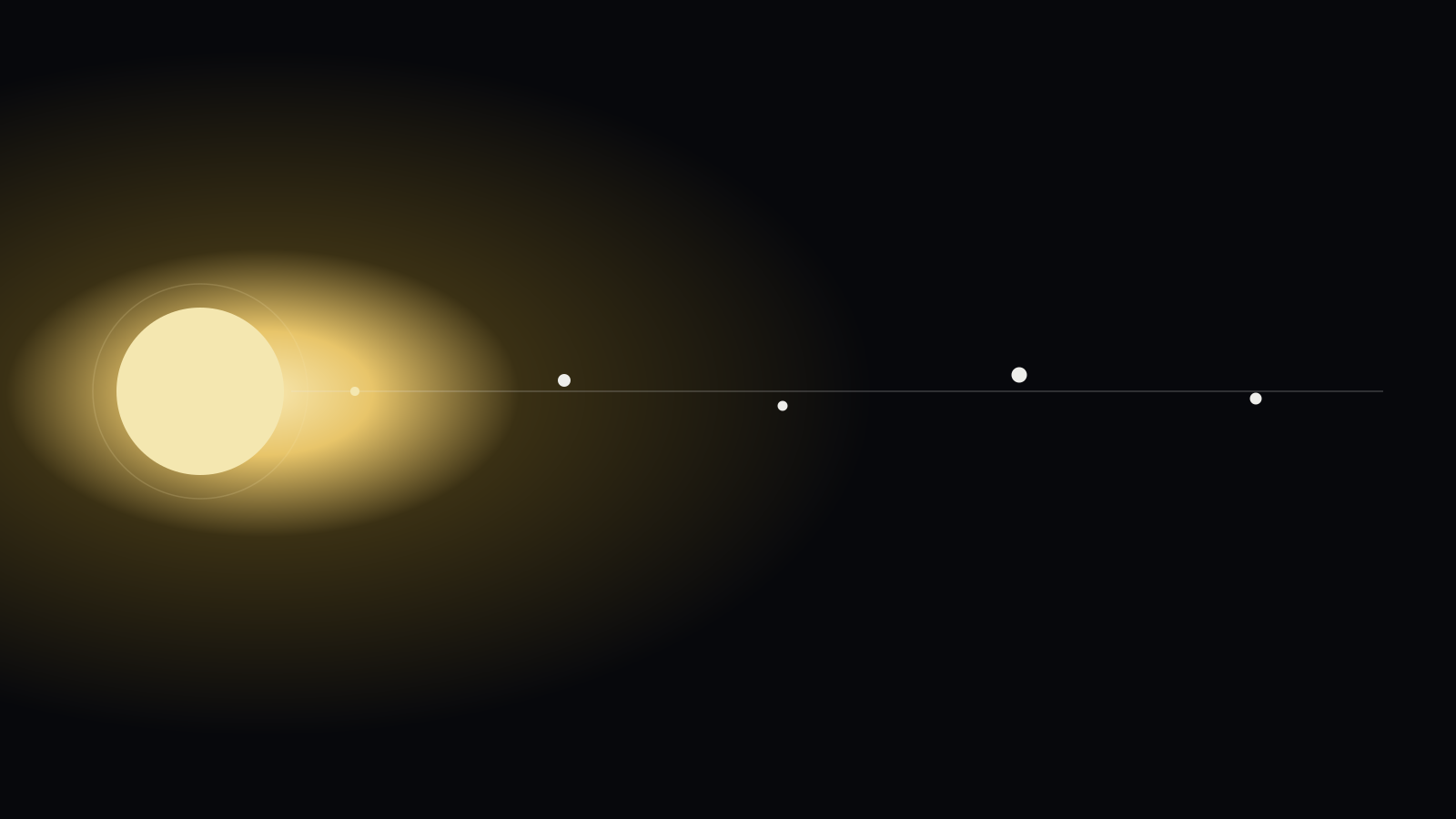
- MercuryStilbon
- Venus
- Mars
- Jupiter
- Saturn
Stilbon
The glittering one. The hardest of the five.
- Saturn
- Jupiter
- Mars
- Venus
- Mercury
The Greeks called certain lights planētai: wandering stars. Five of them looked like stars and refused to stay put. Mercury never gets more than about 28° from the Sun. Morning or evening, then glare. Most people have never seen it.
MUL.APIN named it the leaping planet. In Chinese it is 辰星, the Chen star, the star that stays within a chen of the Sun. Pliny the Elder, in the Natural History, gave it 339 days, four times the real year. The error was reasonable. The wanderer is difficult to catch.
They named that light Hermes. The hymn is next: a child reverses the tracks before noon is over.
Hermes · Before Mercury was a world, it was a wanderer. PLANĒTAI asks what happened when some lights refused to stay fixed.
Text · Hermes
The child who reversed the tracks
A Greek hymn, sung to Hermes. Zeus and the nymph Maia have a son in a cave on Mount Cyllene, in Arcadia. It is the fourth of the month. He is born at dawn. Before the day is over he has made an instrument, stolen a herd, and taught the ground to lie.
The child leaves the cradle. He does not wait to grow. The hymn says he was born in the morning and was playing by noon.
He finds a tortoise at the cave mouth. He scoops it out and strings it. By midday there is a lyre that did not exist at sunrise.
At Pieria he takes fifty of Apollo’s cattle, his older brother’s herd. On sandy ground he turns their feet so the prints run backward. Then he walks the other way himself, so even his own steps refuse to say where he has gone.
Apollo can read a track. These tracks point the wrong way. He finds the baby in the cradle. Hermes says he was born yesterday; his feet are soft; he has not stolen any cattle. Zeus laughs. They bargain. The lyre for the herd. Then a staff, two snakes, and the right to carry messages both ways. That is the herald’s office. The Greeks kept the name for the fastest light.
he reversed the marks of their hoofs, making the front behind and the hind before, while he himself walked the other way.
Sources
- Hugh G. Evelyn-White, trans., Hesiod, the Homeric Hymns and Homerica (Cambridge, MA: Harvard University Press, 1914), Hymn 4, Perseus.
Mark · Caduceus
Two snakes. Not one.
The hymn ends with a staff. This is that staff.
It is not medicine. The healer’s stick is the other one: one snake, no wings, Asclepius. In 1902 the U.S. Army Medical Corps adopted the caduceus anyway. The wrong staff. The fancier one. The messenger changed medium.
The planetary glyph for Mercury.
Astronomers later needed a mark for the planet. The glyph is a shorthand of the staff. The world did not draw it. Hermes also keeps a winged cap, winged sandals, a tortoise that became a lyre, a rooster. Nabu kept a tablet. The Chen star needed none of these. They do not cause one another.
Sources
- Homeric Hymn to Hermes 4. The staff is Apollo’s gift in the bargain. Hugh G. Evelyn-White, trans., 1914.
- Walter J. Friedlander. The Golden Wand of Medicine: A History of the Caduceus Symbol in Medicine. New York: Greenwood, 1992. On the 1902 U.S. Army Medical Corps adoption.
- The astronomical symbol ☿ is treated here as a later shorthand of the staff, not as a message from the planet.
One world · many offices
They do not cause one another
- PhysicsThe Sun appears to reverse
- HistoryRadar reverses the day
- MythHermes reverses the tracks
Latin · planet-name
Mercurius
from merx, merchandise
Commerce, boundaries, travelers. The Western name for the world.
Akkadian · Borsippa
Nabu
tablet and stylus
A scribe. Patron of writing. Not a cattle-thief.
Sanskrit · weekday
Budha
intellect · Wednesday
The graha of discrimination. Not the Buddha.
Chinese · observational
辰星
Chénxīng · Chen star
The star that stays within a chen of the Sun. A name from watching, not from a god.
Sources
- Evelyn-White, Hugh G., trans. Homeric Hymn 4. See Hermes, above.
- Lewis, Charlton T., and Charles Short. A Latin Dictionary, s.v. “merx.” Oxford: Clarendon, 1879. Perseus.
- Hunger and Pingree, MUL.APIN. 辰星 is an observational title, not a god-name. Budha is a graha; not the Buddha.
3:2
3
spins
59 Earth days
2
Mercury years
88 Earth days each
1
solar day
176 Earth days
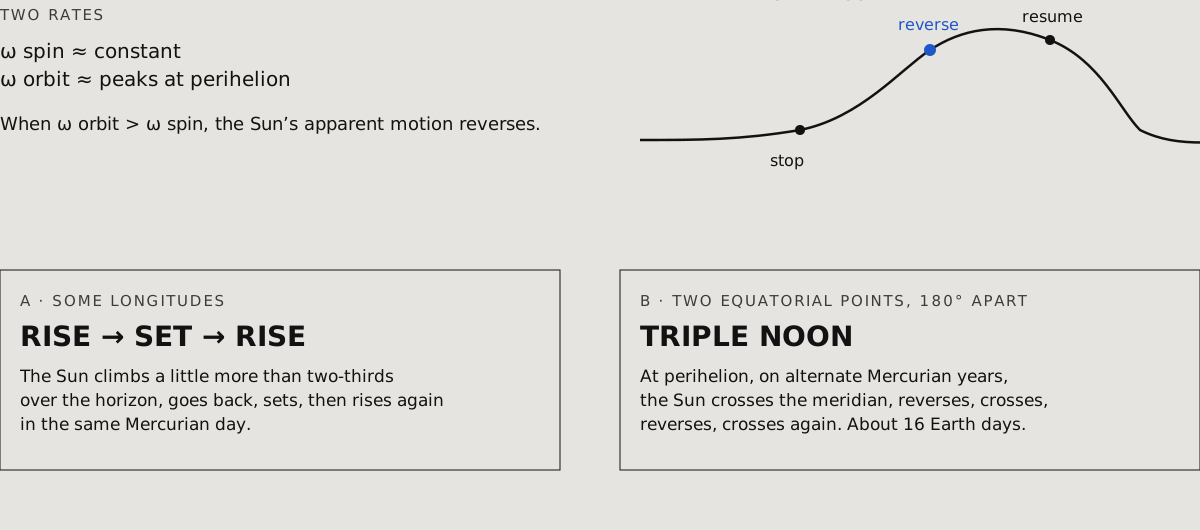
Near perihelion the orbit overtakes the spin. The Sun stops. Reverses about eight Earth days. Goes forward. Rise, set, rise: a consequence of this clock, not a costume.
Apparent solar reversal · Mercury · physics, not costume
About four Earth days before perihelion the Sun stops. It moves backward about eight Earth days. About four Earth days after perihelion it goes forward again.
Sources
- Colombo, Giuseppe. “Rotational Period of the Planet Mercury.” Nature 208 (1965): 575.
- Peale, S. J., and T. Gold. “Rotation of the Planet Mercury.” Nature 206 (1965): 1240–1241.
- Send
- Wait
- 59 ± 5days
88-day lock
Arecibo · April 1965 · 430 Mc/s · 2 MW. The Doppler across the disk did not fit one face to the Sun. The old markings survived. The instrument changed what they meant.
Sources
- Pettengill, G. H., and R. B. Dyce. “A Radar Determination of the Rotation of the Planet Mercury.” Nature 206 (June 19, 1965): 1240. DOI.
The spacecraft returns.
The world shows the same face.
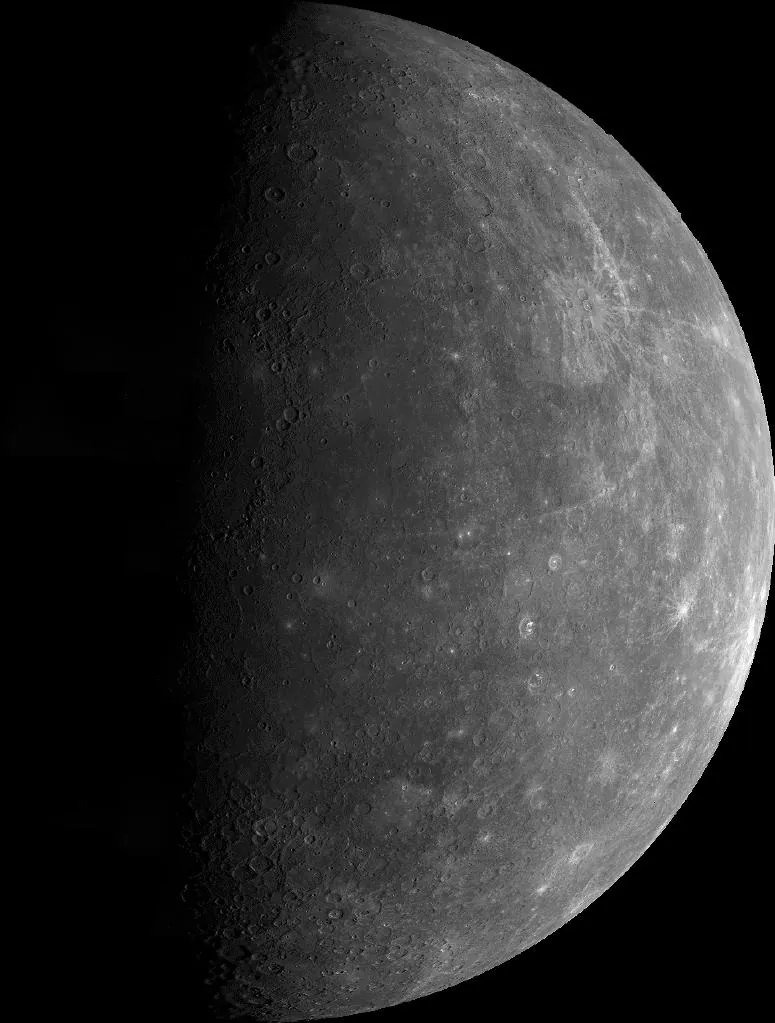
Three flybys. Two Mercury years between them. The lighting family returns. PIA02418 is the 29 March outgoing mosaic, the first visit. Later encounters showed roughly the same sunlit hemisphere. Colombo had already seen that the clock was a way to come back.
Sources
- NASA / JPL. “Outgoing Hemisphere.” Mariner 10 television mosaic, 29 March 1974. Photojournal PIA02418. Public domain. Photojournal. The same plate is shown three times, dated to the three flybys.
Nearest the Sun
Permanent shadow
InstrumentPIA19411

Water ice on Mercury
Yellow marks locations that show evidence of water ice, from Earth-based radar, overlain on an MDIS mosaic. The yellow is the instrument, not the colour of the ice.
NASA / JHUAPL / CIW. “Water ice on Mercury.” PIA19411. Source.
~42%of the volume
~85%of the radius
420 kmsilicate skin
Before MESSENGER, prevailing interior models pictured a smaller core. Then NASA sent an orbiter named MESSENGER, short for MErcury Surface, Space ENvironment, GEochemistry, and Ranging, and left it circling from 2011 to 2015. The gravity field it mapped said the core radius is about 2,020 km, of a world whose radius is about 2,440 km. Volume and radius are not the same kind of number. The craft was named for a messenger. It reversed the model anyway.
Sources
- S. J. Peale, “Does Mercury Have a Molten Core?” Nature 262 (1976): 765-766, DOI.
- Jean-Luc Margot et al., “Large Longitude Libration of Mercury Reveals a Molten Core,” Science 316, no. 5825 (4 May 2007): 710-714, DOI.
- Mathieu Dumberry and Attilio Rivoldini, “Mercury’s Inner Core Size and Core-Crystallization Regime,” Icarus 248 (2015): 254-268, DOI.
Not everything that tells us something was trying to tell us something.
- Carrier a wave that can hold a change
- Signal a change at a detector
- Encoding how the change is packed
- Data numbers extracted
- Interpretation a 59-day day instead of 88
- Message information sent on purpose
The radar echo was a signal. The period was information. Mio’s card is a message. Mercury did not write a letter. Shannon measured uncertainty. Dawkins named a replicator. Neither is the planet speaking.
Sources
- Shannon, Claude E. “A Mathematical Theory of Communication.” Bell System Technical Journal 27 (1948): 379–423. DOI.
- Dawkins, Richard. The Selfish Gene. Oxford: Oxford University Press, 1976.
Message · JAXA
Human beings sent messages to Mercury.
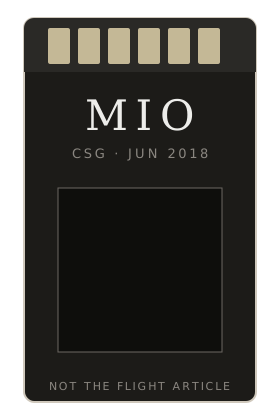
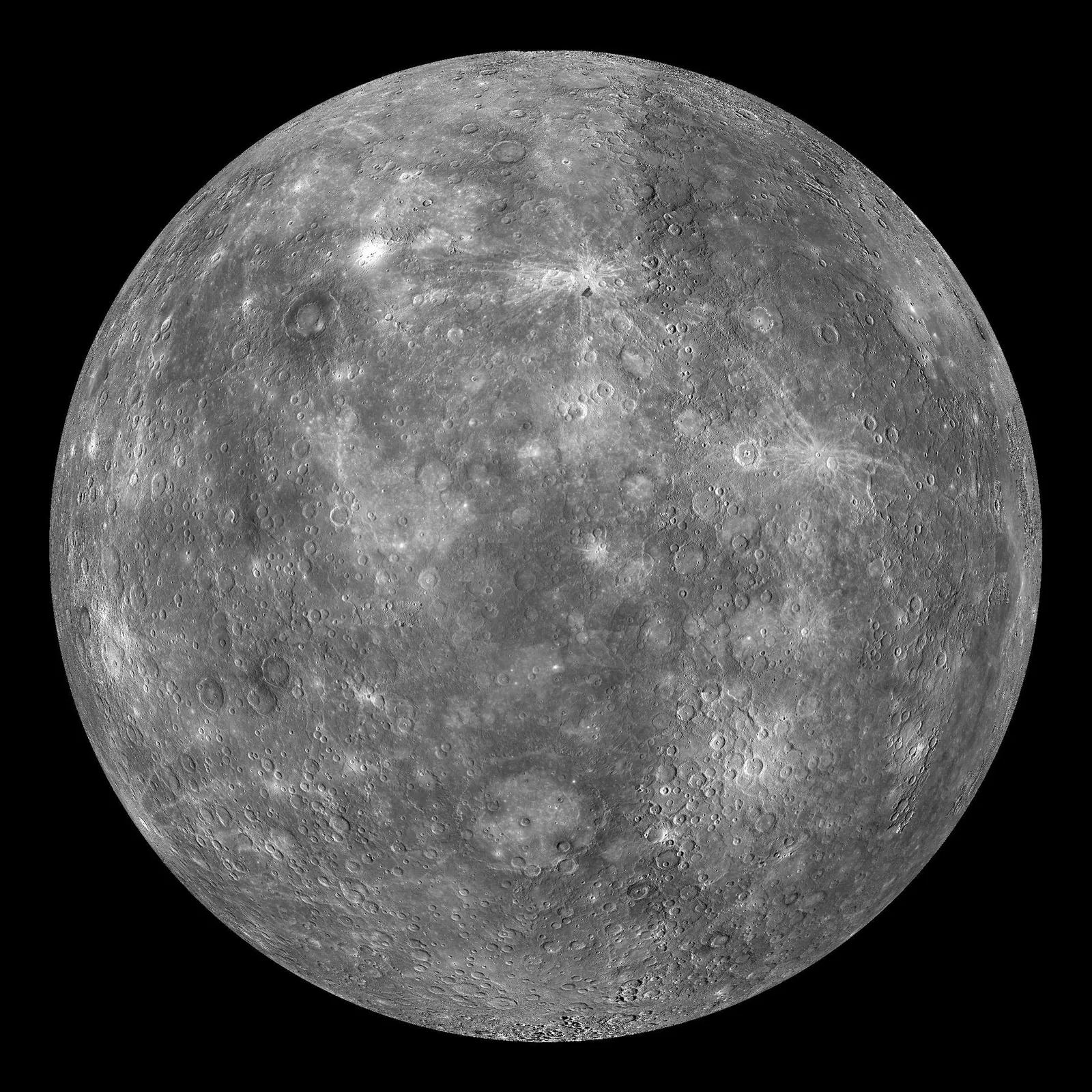
6,000+
names, messages, photographs, videos
“in order to send Freddy Mercury’s song to Mercury.”
- Memory card installed at CSG, June 2018.
- Mio = waterway / fairway / mio-tsukushi.
- JAXA states a karaoke of “Bohemian Rhapsody” was placed on the card.
Sources
- Japan Aerospace Exploration Agency. “Messages on MIO.” Institute of Space and Astronautical Science. JAXA.
- NASA / JHUAPL / CIW. “Mercury globe.” Photojournal PIA15161. Public domain. Photojournal. Used here as postage on a drawn card, not as a JAXA photograph.
AppearancePIA19445

One of the last
MDIS image acquired the day before impact. One filter. The spacecraft completed its orbital mission and struck the surface the following day.
NASA / JHUAPL / CIW. “One of the last.” PIA19445. Source.
Suisei Planitia · near Janáček
Loss of signal.
4,104 orbits. Then the messenger did not come back.
Dispatch · live
Acquisition of signal.
3 September 2026. The Mercury Transfer Module leaves the stack. The line from Cebreros and Malargüe is the spine.
Roll call complete. GO for separation.
Preliminary Doppler consistent with MTM separation.
AOS Cebreros + Malargüe. Systems nominal. MPO arrays charging.
Mercury orbit insertion. Archive this line when it occurs.
Sources
- European Space Agency. “Latest updates: BepiColombo’s arrival at Mercury.” September 3, 2026. ESA.
Record
1971
28 June 1971 is a public nativity, Pretoria. The birth date was fixed before Mercury’s motion was checked. Then a cycle table for that year was opened. Astro-Seek surfaced the dates. Horizons DE441 is the source of record. Stars · Mercury-birth
20 Apr 1971
−0°42′ / day
DE441
69 days later
28 Jun 1971
Evening Rise
The nativity
Reverse Reduction
ELON REEVE MUSK
- E4
- L6
- O3
- N4
- R9
- E4
- E4
- V5
- E4
- M5
- U6
- S8
- K7
69
The measurements are hard. The correspondence is observed. The significance remains open.
Sources
- NASA Jet Propulsion Laboratory. Horizons System, DE441. Source of record. Horizons.
- Astro-Seek. “Calculate Mercury Cycle,” 1971. Discovery interface, not the numerical authority. Astro-Seek.
- The Book of 42. “Stars · Mercury-birth.” Originating nativity. Stars · Mercury-birth.
- Reverse Reduction: A=8 … Z=1, cycling. ELON REEVE MUSK sums to 69.
Post · the packet shrinks
The message compresses
A meme is tiny, and carries context far larger than itself. That is not a slogan. It is what happens when most of the program already lives in the receiver.
- Herald
- Letter
- Signal
- Radio
- Network
- Post
- Meme
Packet size falls. Reconstructed meaning does not, if the codebook matches. If it does not, the last bar is noise.
Shannon · Kolmogorov · Dawkins
Shannon measured redundancy against a shared source. Kolmogorov asked how short a description can be once the receiver already knows the language. Dawkins named a replicator. Three instruments. Not one claim. The planet is none of these.
Recorded
Memes reveal
many truths
Recorded
Memes are the most information-dense
form of communication
Recorded
I am the WiFi
He made a few
He staged one. He wrote one. He did not invent Doge.
Entering Twitter HQ – let that sink in!
Staged
Written
Doge. Atsuko Sato photographed Kabosu.
Favorite. Not an author.
Sketches
Not spoken. The jokes stay pictures.

420 
the bird is freed 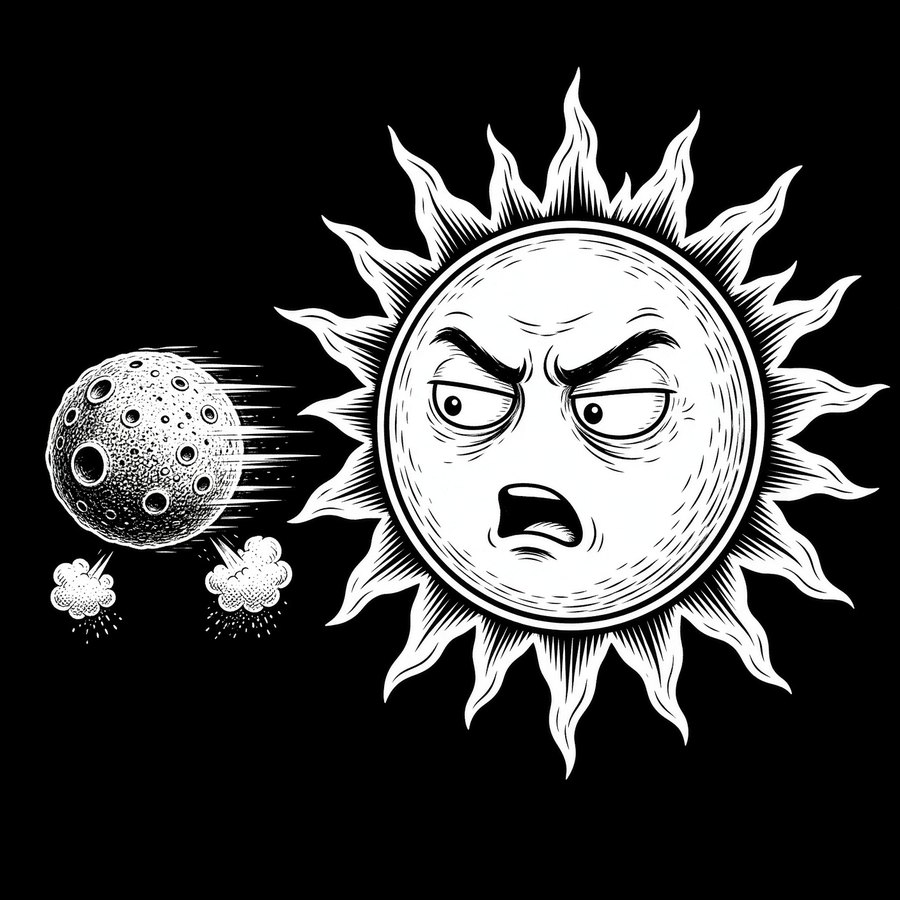
the Sun reverses
Ours
Not spoken. Three operations. Three pictures.
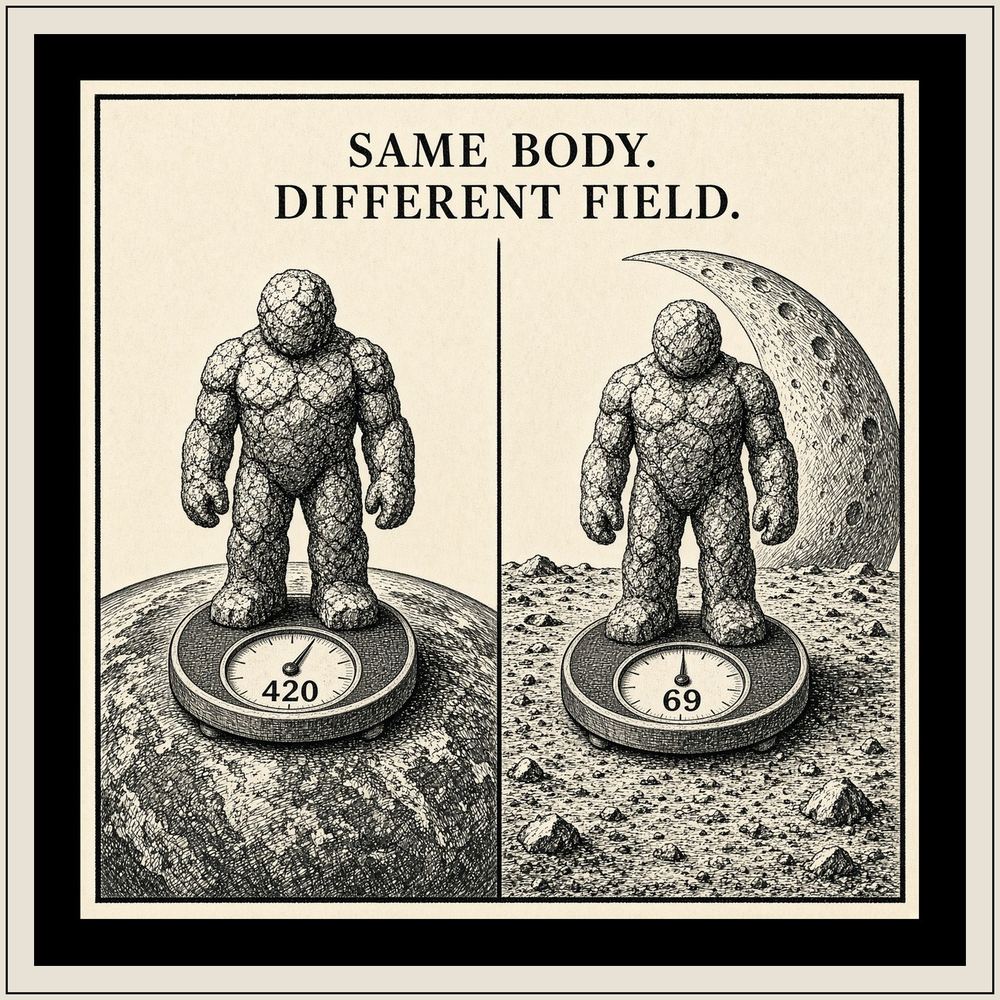
same body 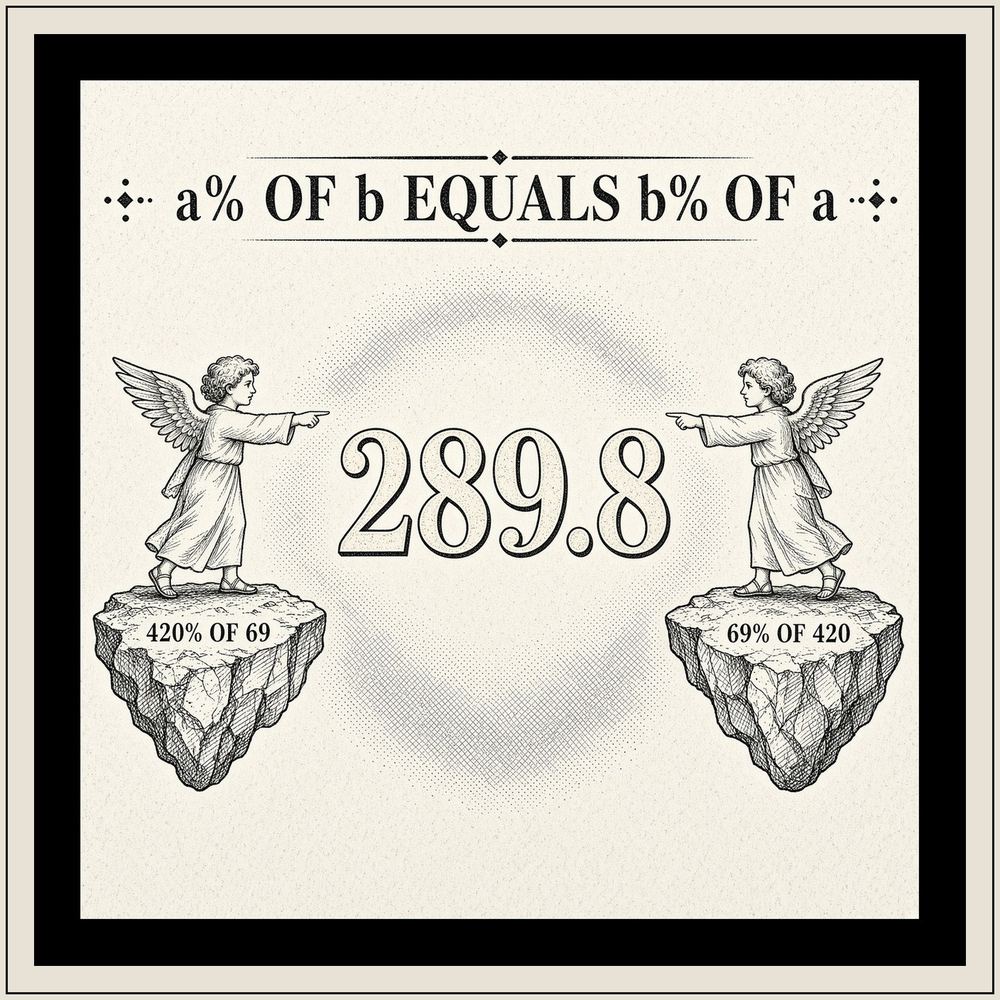
a% of b 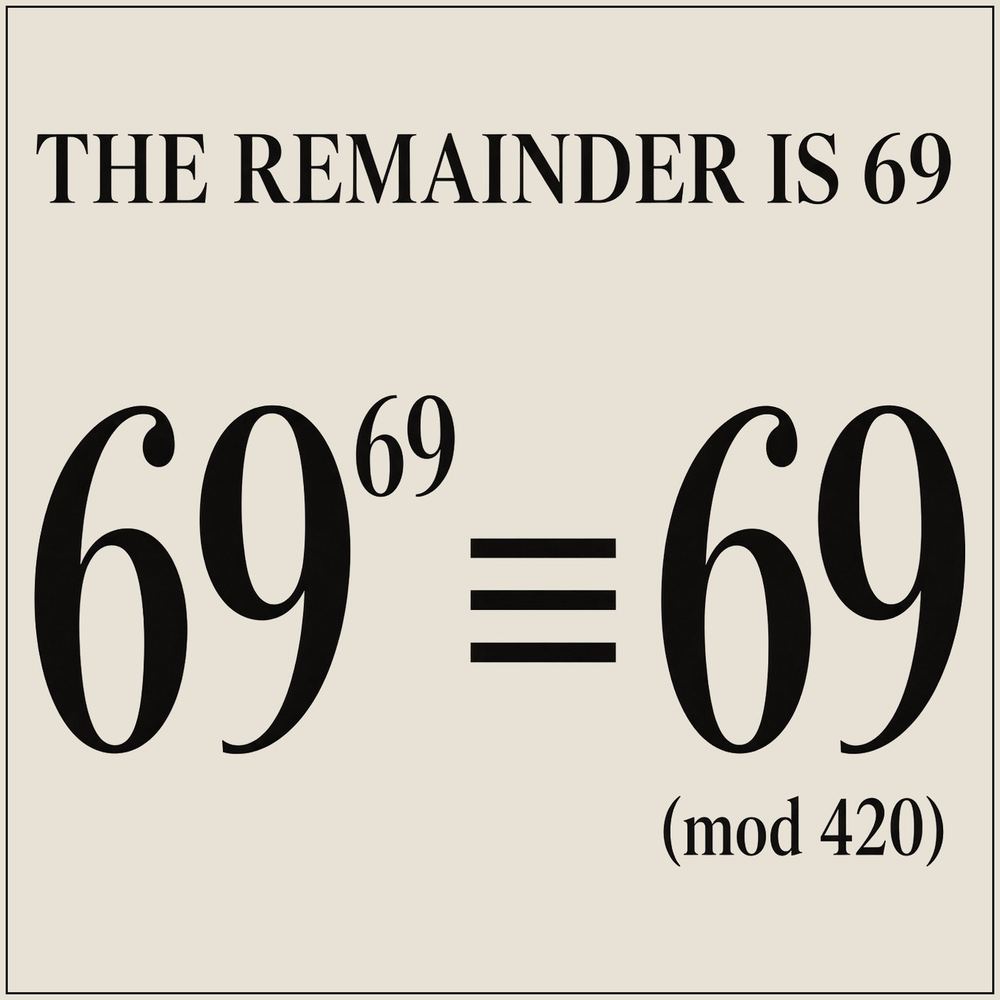
mod 420
Sources
- Shannon, Claude E. “A Mathematical Theory of Communication.” Bell System Technical Journal 27 (1948): 379–423. DOI.
- Dawkins, Richard. The Selfish Gene. Oxford: Oxford University Press, 1976.
- Musk, Elon. X, January 3, 2025. X.
- Musk, Elon. X, July 17, 2025. X.
- Musk, Elon. X, May 15, 2026. X.
- Musk, Elon. “Entering Twitter HQ – let that sink in!” X, October 26, 2022. X.
- Musk, Elon. “the bird is freed.” X, October 28, 2022. X.
- Doge: Atsuko Sato’s photograph of Kabosu, 2010. Musk did not create the meme.
- The birdcage drawing illustrates the dated line. It is not Musk’s post, and it is not a NASA plate.
- NASA NSSDC. Moon Fact Sheet. Surface gravity: Moon 1.62 m/s², Earth 9.80 m/s², ratio 0.165. 420 × 0.165 ≈ 69.3.
- a% of b = b% of a = ab / 100. Independently: 420% × 69 = 69% × 420 = 289.8. The same identity gives 42% of 69.
- 6969 ≡ 69 (mod 420). Calculated: pow(69, 69, 420) = 69. Three operations, three structures. None is Mercury speaking. Significance remains open.